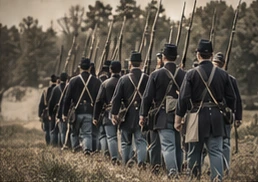
Concept illustration; not an archival photograph.
History beyond the battlefield
Military history often begins with campaigns and battles. Living history also asks what happened between them: how soldiers organized their belongings, prepared for the day, and lived alongside one another. These ordinary details help visitors think about soldiers as people rather than figures in a distant narrative.
Reading everyday objects
A cap, a canteen, or a piece of personal equipment can begin a useful conversation. What was its purpose? How was it carried? What evidence explains its use? An object becomes more meaningful when it is connected to letters, photographs, material research, and the circumstances of a particular unit.
From research to interpretation
An accurate impression is an ongoing process. Living historians compare sources, discuss uncertainties, and refine their choices. Clothing alone cannot explain an experience; interpretation also considers routines, relationships, and the limits of what the surviving record can tell us.
A thoughtful way to visit
At a living history presentation, ask how an interpretation was researched and which details are specific to the setting. Respect safety boundaries and ask permission before handling equipment. Curiosity and conversation can turn a brief visit into a lasting interest in history.